Fruit Water Yeast Bread with a Pre-Ferment

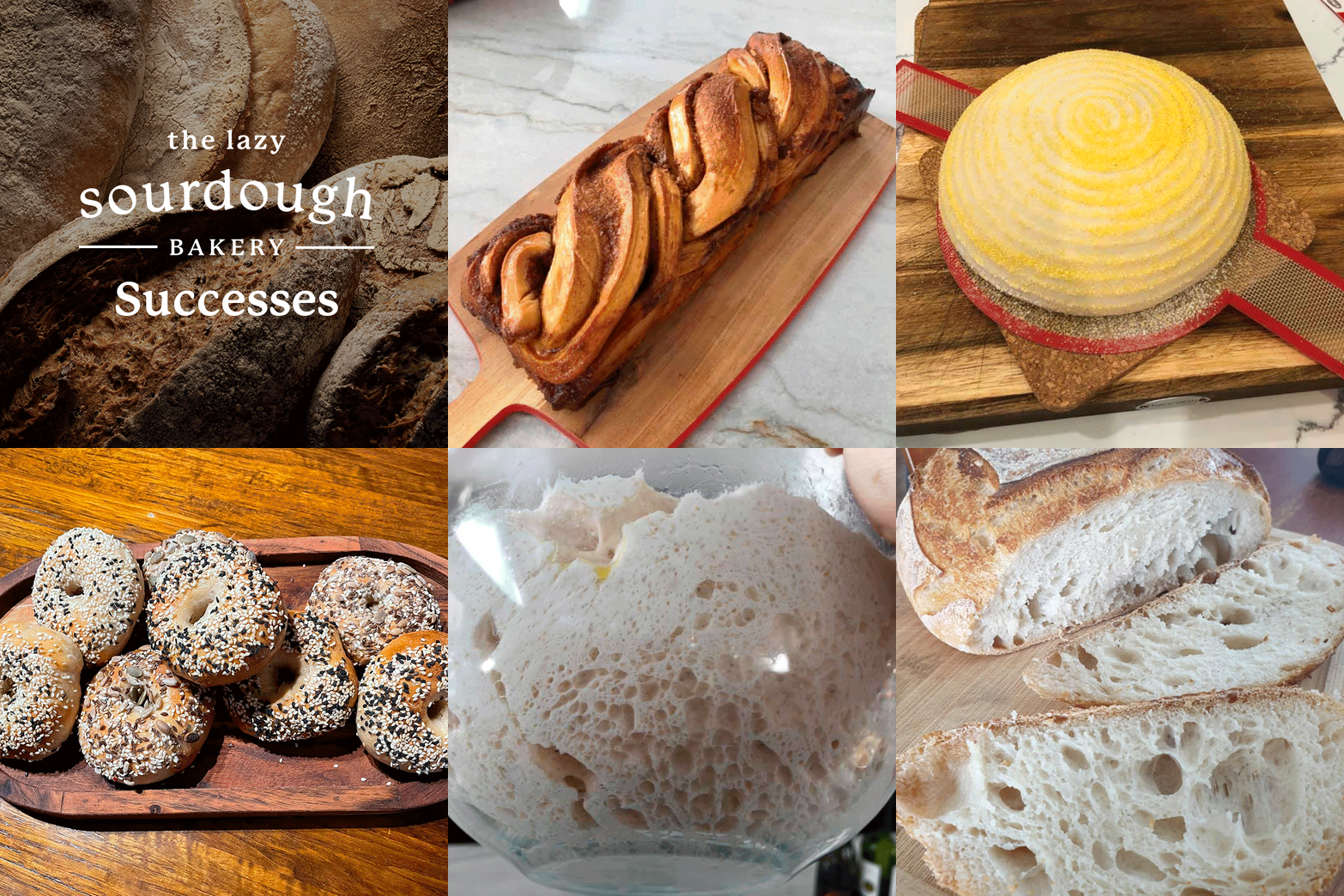
A soft, naturally leavened no-knead loaf made with fruit water yeast and a gentle poolish for flavour and lift.
This no-knead fruit water loaf is a relaxed, low-effort way to bake naturally leavened bread without sourdough or commercial yeast. Using fruit water yeast and a simple poolish, the dough develops flavour slowly while you do absolutely nothing, no kneading, no stretching, no drama. (No Thermomix!) The result is a soft, lightly aromatic loaf with good structure, a tender crumb and none of the tang that puts some people off sourdough. It’s natural fermentation with training wheels firmly on.
How to Tell When Both the Yeast and Poolish Are Ready
Fruit Water Yeast is Ready When:
Bubbles rise easily when the jar is shaken
Fruit floats and the liquid looks lively
It smells lightly fruity or softly yeasty
The lid releases a quiet hiss when opened
Poolish is Ready When:
The surface is bubbly and domed, then just starting to flatten
It smells sweet, mildly fermented and clean
It jiggles when the bowl is moved
Timing is usually 6–12 hours, depending on temperature
If either smells sharp, boozy or unpleasant, don’t use it.

Need
-
The Poolish (Pre-ferment)
- 150 Grams Natural Fruit Yeast Water Recipe
- 150 Grams light rye flour BUY
-
The Loaf
- 280 Grams Natural Fruit Yeast Water Recipe
- All the pre-ferment
- 400 Grams bakers or strong flour BUY
- 10 Grams fine grind salt
- polenta for dusting or coating
Do
- 1
Give yourself a minimum of 12 hours to let the poolish or pre-ferment do its thing. This is entirely for flavour and texture. The yeast water works a lot slower than traditional yeast and water.
- 2
To make the poolish, combine all ingredients in a jar or jug and give it a good stir with a silicone spatula. Make sure all flour is wet and well combined. Cover loosely and allow to rise at room temperature for 12 hours until very active and bubbly. Seasons will determine how long this takes.
- 3
Ideally when you are ready to make the loaf it will be in the evening before you are going to bed. You need at least 90 minutes to make the dough! So put on a good show and set a timer for the folds.
- 4
Place all the loaf ingredients and all of the poolish into a large wide rimmed bowl. Stir well, using your hand. You don't need to be too fussy at any stage. Just make sure the flour is completely wet. Cover and leave for 30 minutes.
- 5
Using a wet hand, stir the dough with a pinching action. Pull it up and over on itself as much as it will allow. The gluten is just starting to be activated at this stage, so don't expect too much.
- 6
Repeat this process (with minimum 30 minutes in between) two more times. By the end of the 3rd mix you should have a pretty good ball of (very sticky) dough. Cover and leave on the bench overnight.
- 7
It will be ready to form into a boule or other shaped loaf in the morning. Don't plan this for a day when you are running out the door first thing. You do need to have a little time up your sleeve.
- 8
Tip the dough out onto a well floured bench. Dust your hands with plenty of flour and pull and fold the dough on top of itself, trying to trap air into the centre of the loaf. Do this until you have a good round shape. Transfer, tidy side down into either a well floured (using the polenta) proofing basket or a basin you have lined with a linen tea towel, also well coated with polenta. Cover loosely and allow to prove until it has risen enough so you notice the difference. It doesn't need to be doubled in size but needs to have a more cohesive look to the texture.
- 9
Meanwhile, heat a Dutch oven with a lid in an oven set to as hot as you can get it. My oven goes to 275°C and that is the temperature I preheat on.
- 10
When the dough is risen enough, remove the Dutch oven from the oven, dust it liberally with more polenta, and upturn the loaf into the Dutch oven, being extremely careful as it is VERY hot. If you are not crazy (or confident) enough to do this by hand, use a piece of baking paper and transfer the dough on the paper into the preheated Dutch oven.
- 11
Snip the top of the dough with scissors or with a lame if you have one. This is essential so the loaf can grow to its full size. Reduce the oven temperature to 260°C.
- 12
Place the lid on top of the Dutch oven and return to the oven for 20 minutes. Reduce temperature again to 220°C, uncover and bake a further 20 minutes until a golden brown. Cool completely before cutting, if you can wait that long!
Served with
This recipe can be seen if you sign up for the related course. Join the course to get access!
Gut Instinct Protocol: The Power of Fermented and Cultured Foods

Tenina Holder is a wife, mother of five and grandmother of nine, who started cooking in the olden days before Thermomix was even a thing.
Tenina has become the premium go to source for all Thermomix expertise and of course fresh and easy recipes that work. Her cooking classes and foodie trips are sold out in literally hours, her cookbooks appear on the Australian best seller lists and her social reach is in the millions. Her Insider Club is the most fun you can have with a Thermomix and you really should join her! She believes chocolate, butter and salt are health foods. Her food positivity mantra is, eat everything, just not all at once!