Basic First Brine


A basic saltwater brine you’ll use for almost everything
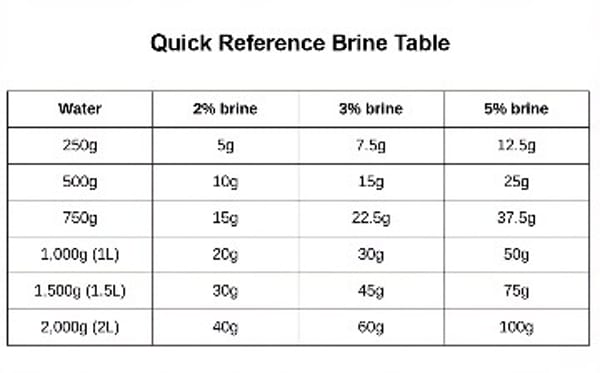
This is your master, scalable brine. Choose the salt % you need, weigh your water, do the tiny bit of maths, and you’re off. We will refer to this recipe quite often throughout the Gut Instinct Protocol courseware.
How salty should it be?
2% brine – soft veg, kraut-style ferments, gentler flavour
3% brine – most crunchy pickles (carrots, cucumbers, beans)
5%+ brine – very high-sugar veg/fruits, olives, long ferments
Formula:
Salt (g) = Water (g) × Brine % (as a decimal)
e.g. 1000g water × 0.03 = 30g salt (3% brine)
1mL water ≈ 1g, so you can treat millilitres as grams for this purpose.
Troubleshooting
Cloudy brine? Usually normal, indicates active fermentation.
White film (Kahm yeast)? Skim it off; it’s harmless but can affect flavour if left.
Veg floating? Weigh them down; exposure to air invites mold.
If you don't have proper pickling weights, you can put some water into a ziploc bag and use that to weigh down the veggies, before sealing the jar.

Need
- 30 Grams fine grind salt
- 1 Litre filtered water
Do
- 1
Add the water to the bowl and weigh. Note the weights ratio. The quantities here are for 1 litre at 3% brine, which is my usual preference.
- 2
Calculate the salt required (see formula) if you are making more than 1 litre.
- 3
Add salt and heat 1 min/37°C/speed 2 (or until fully dissolved).
- 4
Cool to room temperature before pouring over vegetables/cultures.
- 5
Aromatics (optional but delicious)
- 6
Add to your jar before pouring in the brine:
- 7
Garlic cloves, peppercorns, dill, bay leaves
- 8
Mustard seeds, coriander seeds, chilli flakes
- 9
Citrus peel, ginger, fennel seeds
- 10
How to use it
- 11
Cover completely: Vegetables must stay below the brine line (use a weight). You can even use a ziploc bag of water to weigh down the veggies so they are beneath the brine.
- 12
Top-up brine: Mix a small batch at the same % to top up any evaporation or siphoning.
- 13
Label it: Note % salt, date, and what it’s used for.
More
Storage
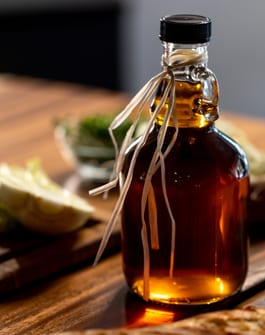
Keep pre-made brine in a clean jar/bottle in the fridge for up to 4 weeks.
If it smells off, goes ropy or moldy, discard and remake.
This recipe can be seen if you sign up for the related course. Join the course to get access!
Gut Instinct Protocol: The Power of Fermented and Cultured Foods

Tenina Holder is a wife, mother of five and grandmother of nine, who started cooking in the olden days before Thermomix was even a thing.
Tenina has become the premium go to source for all Thermomix expertise and of course fresh and easy recipes that work. Her cooking classes and foodie trips are sold out in literally hours, her cookbooks appear on the Australian best seller lists and her social reach is in the millions. Her Insider Club is the most fun you can have with a Thermomix and you really should join her! She believes chocolate, butter and salt are health foods. Her food positivity mantra is, eat everything, just not all at once!